Booklice Pest Control
Booklice, also called bark lice, are tiny, pale insects, usually white, found outdoors feeding on mold. Indoors they turn up in humid areas: a bathroom, around a leaky pipe, or in new construction where building materials are still drying out.
What Booklice Look Like
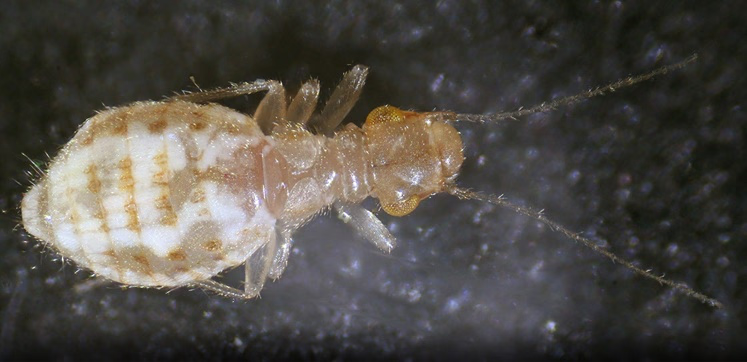
An adult booklouse is about 1/25 to 1/16 of an inch long, which is barely bigger than the head of a pin. The body is soft and pale, from nearly clear to gray or tan. The head looks large for the body, and the antennae are long and thin. Indoor booklice have no wings. They move in quick, jerky runs, and they are easiest to spot against a dark surface or the white page of a book.
Despite the name, booklice are not true lice. They do not bite people or pets, they do not live on the body, and they do not spread disease. People sometimes mistake the young for bed bugs or head lice. Bed bugs are larger, flat, and reddish brown, and they hide near beds rather than in damp paper and boxes.
Identifying a Booklice Problem
Booklice can appear in large numbers, but unlike some household pests they do not damage structures or belongings. They are often mistaken for a more serious infestation simply because of how many can show up at once in a small, damp area.
They eat the microscopic mold that grows on damp materials. That is why they gather on old books and papers, cardboard boxes, wallpaper paste, and window sills where condensation collects. They also show up in the soil of houseplants and in pantry foods such as flour and cereal that have picked up moisture.
Why Booklice Appear in a Dry Climate
Booklice need humid air. They thrive when the relative humidity stays above about 75 percent, and they die out when it stays below about 50 percent. Outdoor air around Reno is dry for most of the year, so booklice indoors almost always point to a specific moisture source. Common ones include:
- A slow plumbing leak under a sink or behind a wall.
- A bathroom without a working exhaust fan.
- An evaporative cooler that adds moisture to the house all summer.
- A damp basement or crawl space.
- New construction, where wood, drywall, and concrete are still drying out.
Booklice Control
Because booklice depend on moisture and mold, the most effective control is environmental rather than chemical: fix the leak, improve ventilation in the affected room, and reduce the humidity that let mold get started in the first place. Once the moisture problem is resolved, the booklice population that depended on it generally goes with it.
A few practical steps help the process along:
- Check the room with an inexpensive humidity gauge, and run a dehumidifier until it reads below 50 percent.
- Move stored boxes off basement floors and away from outside walls.
- Replace damp cardboard with sealed plastic bins.
- Throw out moldy paper and pantry food that shows booklice.
- Vacuum shelves, sills, and corners to remove the insects and the mold they feed on.
- Seal a small infested item, such as a favorite book, in a plastic bag and leave it in the freezer for several days, which kills the insects without chemicals.
Spraying alone rarely solves a booklice problem, because new insects keep coming as long as the damp spot remains. If a moisture problem is difficult to pin down, or booklice keep returning after cleanup, a professional inspection can identify the source and confirm the treatment.